A new name, backed by years of experience
ria@riasinteriors.co.uk01733 462280

HomeAdvice › Blackout & Thermal Curtains

Light & Warmth Advice

Blackout Blinds and Thermal Curtains:
What Actually Works

Most of what blackout and thermal curtains do happens behind the fabric, in the lining and the fit. This guide explains the options plainly: what each lining does, where blackout blinds fit in, where interlining is worth it, and how to get a genuinely dark, comfortable room rather than a nearly dark one.

Full fabric sample books brought to you Lined, blackout and interlined options Free no-obligation home consultation Honest, no-pressure advice
Call Ria01733 462280
Free ConsultationNo Obligation Quote
Samples In Your HomeSee fabrics in your own light
CoveragePeterborough & surrounding areas

It is mostly about the lining,
and then the fit

When people say a curtain “doesn’t work”, the fabric is rarely the problem. What decides whether a room gets dark, stays comfortable and feels properly finished is what sits behind the fabric and how the curtain fits the window: the lining, the fullness, the heading, and how much gap is left at the top, sides and bottom.

That is also why two curtains in the same fabric can perform completely differently. This guide walks through the lining options plainly, then the rooms where they matter most. If you would rather just talk it through, the free home consultation covers all of this with the actual fabric books in front of you.

The Options

The three linings,
plainly

Every made-to-measure curtain we supply can be lined to suit the room. Here is what each option actually does.

Standard lining

The everyday choice. It protects the face fabric from sunlight, improves the hang and gives a tidier look from outside. Most living room and dining room curtains are perfectly served by it.

Blackout lining

A denser lining that stops light passing through the fabric itself. The fabric you chose still looks the same from inside the room. The honest caveat: lining controls light through the curtain, not light around it, which is covered below.

Interlining

A soft layer sewn between the fabric and the lining. It adds real weight and warmth and gives the curtain a much fuller, more substantial hang. It costs more, and in the rooms where you want curtains to feel luxurious or help with comfort, it tends to be the upgrade people are glad they made.

Unlined

Right for sheers and for layered looks where the curtain is decorative rather than practical. Not the answer where darkness, privacy or warmth matter.

Blackout curtains that
actually darken the room

Here is the part most retailers do not say: blackout lining alone will not give you a cinema-dark room. Light is persistent. It comes over the top of the curtain, down the sides and through the gap where a pair meets in the middle. A ready-made blackout curtain that is too narrow for the window can leak more light around its edges than an ordinary curtain that fits properly.

Getting a genuinely dark room is a fitting question as much as a fabric question: generous fullness, the right heading, a good overlap in the middle, and a track or pole positioned so the curtain extends well past the window on every side. Best results depend on fabric, lining, fitting and the gaps around the window, which is exactly why we measure rather than guess.

Where real darkness matters most, the strongest combination is usually a blackout-lined curtain with a blind fitted behind it inside the recess. The blind handles the window itself, the curtain handles the edges and the look. We supply both, so the recommendation is about your room rather than one product. There is more on the blind side of this in our best blinds for bedrooms guide.

Blackout blinds, fitted
where they earn their keep

Blinds handle the window itself better than any curtain can, because they sit inside or tight against the recess. Blackout roller blinds are the workhorse choice for bedrooms. Perfect Fit blackout blinds clip into uPVC frames with no drilling, which suits new build windows especially well. And BlocOut specialist blackout blinds are designed to reduce the light gaps around the edges that ordinary blackout rollers leave behind, for rooms where real darkness matters.

Blackout blinds earn their keep beyond bedrooms and nurseries too. In a home office, glare on the screen is usually the problem rather than darkness, and a well-chosen blind manages afternoon sun without turning the room into a cave. Every blind is measured at your home and fitted properly, because a blackout blind that does not fit the recess is just a blind. There is more on the options in our best blinds for bedrooms guide and on our blinds page.

Thermal lined curtains
and colder rooms

Windows are where rooms feel cold. A well-made, properly lined curtain adds layers of material between you and the glass, and that helps improve comfort: the room feels less draughty in the evening, and sitting near the window stops being the cold seat. Interlined curtains take this furthest, because the extra layer adds genuine weight and substance.

We will not promise you numbers, because honest answers beat impressive ones: how much difference curtains make depends on the window, the room and the home. What we can say is that the difference between an unlined curtain and a full-length interlined one on a cold evening is something you feel, not just something you are told about. For older properties and rooms with large or draughty windows, it is one of the most worthwhile upgrades there is.

Fit matters here too. Curtains that finish at the right length and close properly do more for comfort than any lining specification on paper.

Curtains for
bedrooms

Bedrooms are where blackout and comfort meet. The usual brief is simple: dark enough to sleep past sunrise, warm enough in winter, and good-looking the rest of the time. Blackout-lined curtains with proper fullness handle most bedrooms well. Where mornings are very bright, or where street lighting is close to the window, the curtain-plus-blind combination described above gets closest to real darkness.

If you are weighing curtains against blinds for a bedroom, our curtains or blinds comparison guide covers the trade-offs honestly. Often the answer is not either-or.

Children’s rooms and
5am summer mornings

Anyone with young children knows the real enemy: June. Light mornings arrive hours before anyone wants them to, and nap times happen in full daylight. Blackout-lined curtains help reduce light significantly, and paired with a blind they can keep a room restful even on bright afternoons.

Practicalities matter in children’s rooms as much as darkness. Fabrics need to cope with real life, and safety should shape the choices around cords and controls. We will advise on the safest options for children’s rooms as part of the consultation, including cord-free and pole-based choices where they suit the window.

Curtains for
new build homes

New builds come with bare windows, neighbours close by and, often, window sizes that do not match anything sold in a packet. Privacy and darkness are usually the first priorities, especially in bedrooms on overlooked plots, and made-to-measure matters more here than almost anywhere: the windows are non-standard, so ready-made rarely fits properly, and a curtain that does not fit is a curtain that leaks light.

Curtains also do something blinds cannot in a brand-new house: they soften it. New build rooms can feel hard-edged until there is fabric in them. If you are dressing a whole new home, our new build homes service covers the room-by-room approach, and measuring can often be arranged around your move-in date.

Bay windows and
awkward openings

Bay windows are where made-to-measure stops being a preference and becomes the only sensible route. The track needs to follow the bay’s angles or curve, the fullness needs calculating for the true width, and the drop often varies across the bay. Done properly, bay curtains are one of the best-looking things you can do to a room. Done from a packet, they rarely sit right.

The same applies to very tall windows, arches and any opening where the standard sizes were never going to fit. These are exactly the windows worth measuring properly.

Tracks or
poles?

Nobody starts a curtain project excited about this question, but it affects how the curtains look, how they glide and how well they control light. A simple way to think about it: poles are part of the look, with the heading and rings on show, and suit eyelet and tab styles naturally. Tracks disappear, follow bays and curves, and let the curtain sit closer to the wall, which helps where light control matters.

The right answer depends on the window, the heading style you choose and what the curtain needs to do. It is a two-minute conversation at the consultation, with examples in hand.

Why the fabric looks different
in your house

Every fabric photographs well somewhere. The question is how it behaves in your room, with your light, next to your walls. A colour that glows in a bright showroom can sit flat and grey in a north-facing bedroom, and a blackout lining changes how some fabrics drape and read. None of that is visible on a screen or a small swatch.

This is the whole reason Ria’s Interiors works the way it does. The full sample books come to your home, you hold the actual fabric where the curtains will hang, and decisions get made with the real thing in the real light. It removes the most expensive risk in curtains: ordering something that turns out wrong once it is made up.

Where made-to-measure
beats ready-made

Honestly: not everywhere. A standard-size window in a spare room with no special requirements can be perfectly happy with a ready-made pair, and we would rather say that than pretend otherwise.

Where made-to-measure earns its cost is everywhere this guide has covered: proper blackout that fits the window rather than nearly fitting it, lining and interlining chosen for the room, fullness calculated rather than hoped for, bay windows, non-standard new build sizes, and a finished hang that looks deliberate. The difference is rarely visible in a photograph and almost always visible in your living room.

You can see the options, fabrics and heading styles on our made-to-measure curtains page.

Common questions about
blackout and thermal options

No curtain blocks every trace of light, and anyone promising total blackout is overselling. Blackout lining stops light passing through the fabric, and good fitting reduces the light around the edges. For the darkest practical result, we usually recommend a blackout-lined curtain with a blind fitted behind it. Best results depend on fabric, lining, fitting and the gaps around the window.

Yes. Blackout roller blinds, Perfect Fit blackout blinds and BlocOut specialist blackout blinds are all supplied and fitted, alongside blackout-lined curtains. Often the best result for a bedroom or nursery is a blind and curtain working together, and we advise honestly on when one is enough.

Blackout lining sits behind the fabric you chose, so any fabric in the books can become a blackout curtain without changing how it looks from inside the room. Blackout fabrics have the light-stopping layer built in. For most made-to-measure curtains, lining is the more flexible route because you choose the look and the performance separately.

In the rooms where it matters, usually yes. Interlining adds weight, warmth and a much fuller hang, and it is the difference between curtains that look good and curtains that feel substantial. For a little-used spare room it may be unnecessary. Ria will give you an honest view per room rather than recommending it everywhere.

Well-lined, well-fitted curtains help improve comfort: rooms feel less draughty and the area near the window feels noticeably better on cold evenings, especially with interlining and a full-length drop. How much difference they make depends on the window, the room and the home, so we talk about comfort rather than promising figures.

Usually blackout-lined curtains, often paired with a blind for bright summer mornings and daytime naps, in a practical fabric that copes with real life. Safety shapes the rest: we will advise on the safest options around cords and controls for children’s rooms as part of the consultation.

Yes, and new builds are where made-to-measure matters most, because the window sizes are often non-standard and ready-made curtains rarely fit well enough to control light properly. We can usually arrange measuring around your move-in date. See our new build homes service for the whole-house approach.

See the linings and fabrics in your own home

Ria brings the full sample books to you, talks through lining options room by room and gives honest advice with no pressure. The consultation is free and there is no obligation.

Book a Free Home Consultation
Call Ria01733 462280
We cover: Peterborough, Cambridgeshire & surrounding areas
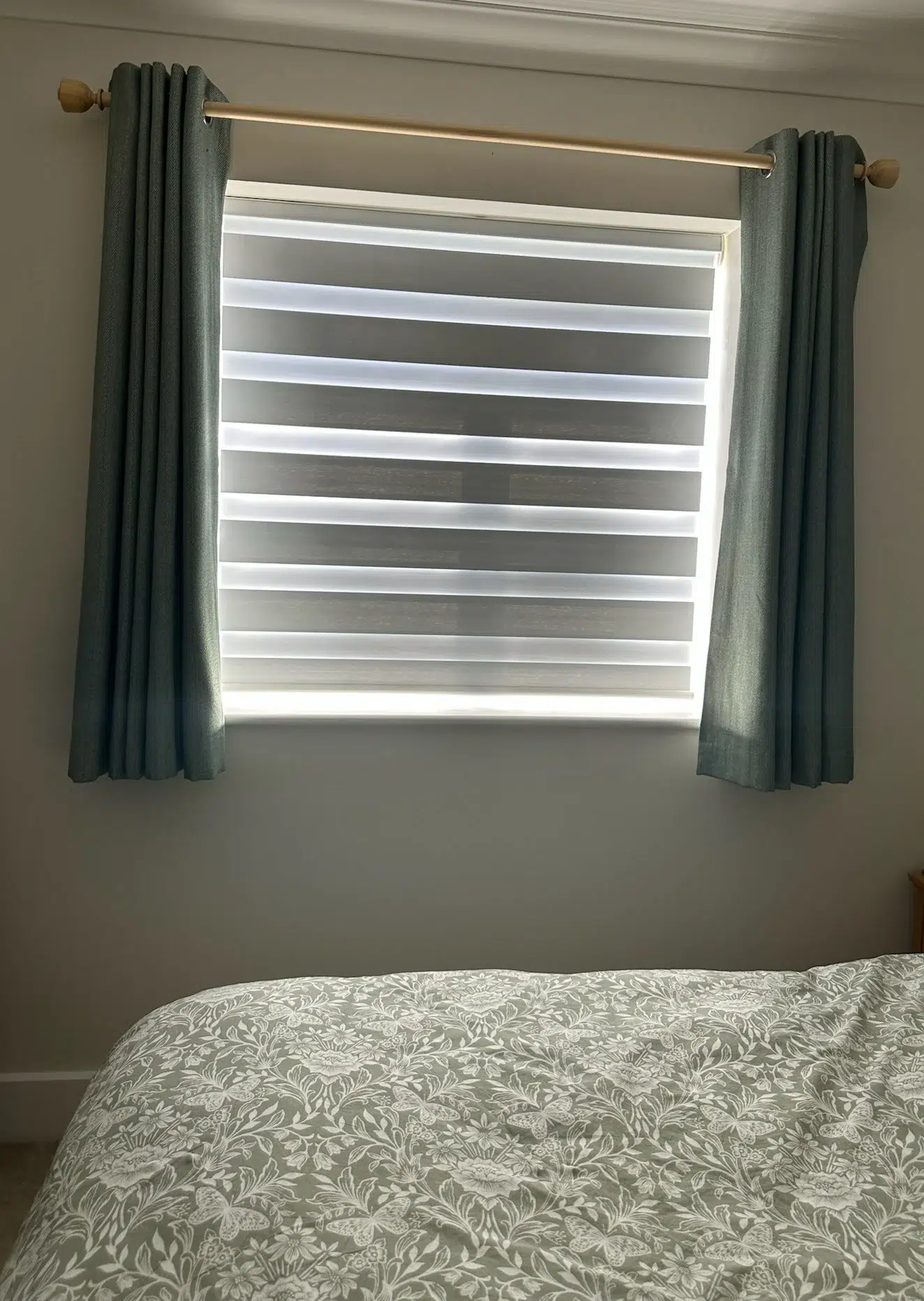
Day and night blinds with curtains fitted in a bedroom by Ria’s Interiors

Choose the fabric
in your own light

Sample books, lining advice and a clear written quote, all at no charge and with no obligation.

Get in touch

Call 01733 462280, email ria@riasinteriors.co.uk, or book a free home consultation and see the lining options against your own windows.

Book a Free Home Consultation
Call Us WhatsApp Book Appointment